
How Deep Draw Metal Stamping Produces High-Precision Parts
Perfect for creating intricate and durable shapes, the deep draw metal stamping technique is used in everything from automotive to plumbing applications. The process, as perfected by our global deep draw stamping company, is ideal for producing custom-engineered parts, as it combines efficiency, repeatability, and superior precision, all while accommodating a wide range of material types and shapes.
Here’s what you need to know about deep drawn metal forming and how it’s able to create the exact components your business needs.
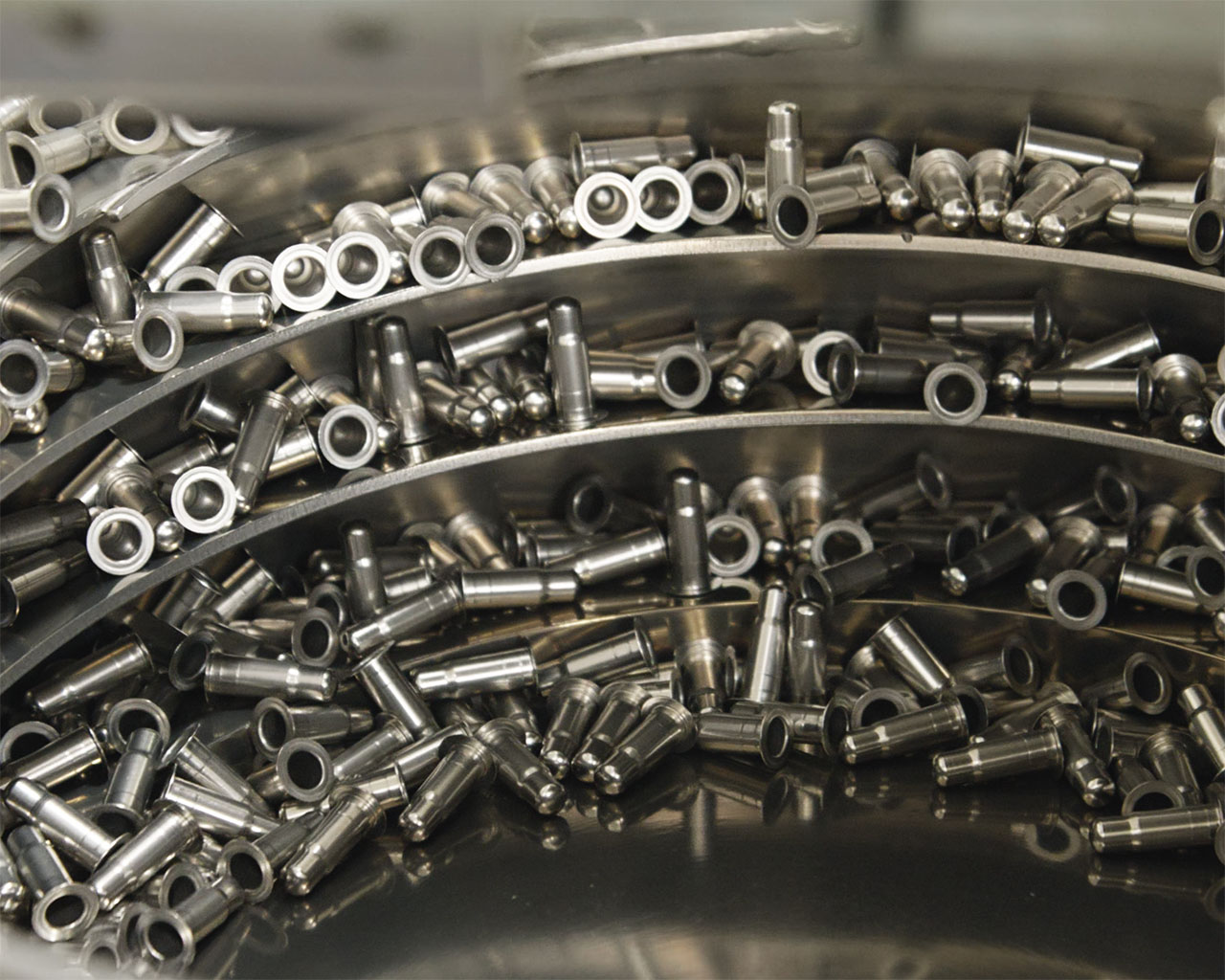
What Deep Draw Metal Stamping Entails
At the core of the deep drawn stamping process is the transformation of sheet metal into hollow shapes, often with multiple drawn stages, without compromising the structural integrity of the material. This is achieved by feeding a metal blank into a die where it is shaped under extreme pressure from a press. The process is referred to as “deep draw” because the depth of the drawn part often exceeds its diameter. It’s a highly efficient process for producing cylindrical, box-shaped, or more complex geometries that are lightweight but durable.
Deep draw stamping stands apart from other methods like machining or casting due to its ability to produce parts with precise tolerances while minimizing material waste. By using progressive dies and advanced equipment, Trans-Matic can produce parts with intricate features, such as flanges, threading, or varying wall thicknesses, all in a single press cycle.
Breaking Down the Advantages of Deep Draw Stamping
One of the major benefits of deep draw metal stamping is the ability to achieve high precision at scale. This process is capable of producing parts with incredibly tight tolerances, which is essential for industries like automotive and electric vehicles where even the slightest deviation can impact performance. Components such as solenoids, sensors, and connectors are often manufactured using deep draw methods because of the need for exact specifications and reliable repeatability.
Another key advantage of creating deep drawn metal parts lies in how the integrity of the material is maintained throughout the process. Materials like stainless steel, aluminum, brass, copper, and titanium can be used in deep draw stamping without cracking or weakening, even when creating highly complex geometries. This makes it an excellent choice for industries like HVAC and plumbing, where corrosion resistance and durability are critical.
Moreover, deep draw stamping offers cost-efficiency through high-speed production and reduced waste. Unlike processes such as machining, which often generate scrap material, deep draw stamping uses the metal sheet efficiently, often converting more than 90% of the material into finished parts. This not only reduces costs but also makes the process more environmentally friendly.
Customization & Versatility Across Industries
Whether producing small electrical components for EVs or robust, corrosion-resistant parts for plumbing and HVAC systems, deep draw stamping can accommodate a wide range of applications and industries. For example, the automotive sector relies on this process to produce critical components like fuel system parts, airbag housings, and engine parts, where precision and strength are essential for safety and performance.
The lawn equipment industry, too, benefits from deep draw stamping, as parts like engine housings and blades require the kind of durability and precision that this process provides. Similarly, in the plumbing industry, deep draw stamping is used to manufacture durable and rust-resistant parts that can withstand exposure to moisture and chemicals.
Making Use of Technology & Material Advancements
As technology advances, so do the capabilities of deep draw metal stamping. Trans-Matic uses sophisticated machinery with automated feeding systems and real-time monitoring, ensuring that parts are produced to exact specifications with minimal variation. Progressive stamping dies and multi-station presses allow for more complex parts to be created in a single operation, improving both speed and precision.
In addition, material science advancements have expanded the types of metals that can be used in deep draw stamping, offering more options for industries that require specialized properties, such as heat resistance, electrical conductivity, or lightweight strength. These innovations ensure that deep draw metal stamping will continue to be a key manufacturing process for industries that rely on high-precision components.
Talk With Our Deep Draw Stamping Pros
Our deep draw metal stamping manufacturer is a worldwide leader in the industry and offers unmatched precision, efficiency, and versatility when it comes to producing custom metal parts. For manufacturers seeking high-quality, reliable components, look no further than Trans-Matic. Fill out our online contact form today to schedule a consultation and let’s talk!
