
The Role of Prototyping in Custom Metal Stamping
Precision and accuracy are critical to producing high-quality stamped metal parts that meet stringent industry standards. Before scaling up production, however, our metal stamping manufacturer must ensure that each component is precisely engineered to match the specifications required for its application. This is where custom prototyping plays a pivotal role, offering an opportunity to fine-tune designs, test materials, and optimize manufacturing processes.
Here’s how you can achieve better outcomes, reduced costs, and faster time-to-market by investing in a robust prototyping phase.
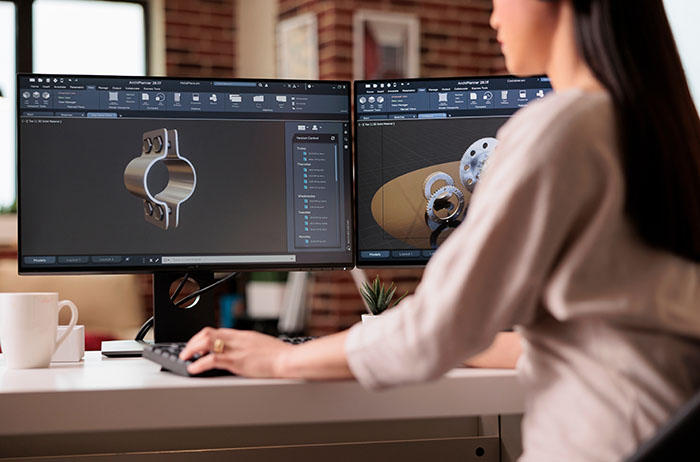
What Is Custom Prototyping in Metal Stamping?
Custom prototyping involves creating a preliminary version of a stamped part to evaluate its design, functionality, and manufacturability before full-scale production. In custom metal stamping, prototypes are essential for industries like automotive, HVAC, plumbing, and alternative energy, where components must meet strict tolerances and performance standards.
Prototyping is especially critical in deep draw metal stamping, where complex shapes and intricate geometries are formed from a single piece of metal. Without the ability to test and refine designs, you risk producing parts that may not perform as expected under real-world conditions. Custom prototyping helps mitigate this risk by providing a physical model for assessment and improvement.
Benefits of Prototyping in Metal Stamping
- Design Validation & Testing
Prototyping allows engineers to validate the design before committing to full-scale production. By producing a sample part, we can identify potential issues, such as stress points, material deformation, or fitment problems, early in the process. This is particularly important in progressive die stamping and transfer press stamping, where complex dies and tooling are used to create intricate parts. - Optimizing Material Selection
Different applications require different materials, especially when it comes to deep draw stamping, which often involves stainless steel, aluminum, or copper. Prototyping provides an opportunity to test various materials and identify the best fit for the component’s performance requirements. By optimizing material selection during the prototyping phase, manufacturers can ensure durability, reduce waste, and enhance overall product quality. - Reducing Production Costs & Lead Times
Investing in custom prototyping can significantly reduce costs in the long run. By catching design flaws and manufacturing inefficiencies early, manufacturers avoid costly revisions and tooling adjustments once production is underway. Additionally, prototyping helps streamline the metal forming process, reducing lead times and allowing companies to bring products to market more quickly. - Enhancing Quality & Precision
Prototyping ensures that parts meet the exact specifications required by industries with tight tolerances, such as automotive and plumbing. The ability to test parts under simulated conditions helps identify potential weaknesses, ensuring that components produced during mass production meet the highest standards of quality and performance.
Prototyping Techniques in Custom Metal Stamping
Several prototyping techniques are used to ensure accuracy and efficiency in metal stamping:
- Soft Tooling
Soft tooling involves using temporary dies made from softer materials like aluminum or urethane to create prototype parts. This approach is cost-effective and fast, making it ideal for testing designs before investing in hardened steel tooling for large-scale production. - Progressive Die Prototyping
For projects that require progressive die stamping, prototyping allows manufacturers to test how the part moves through multiple stations in a single die. This ensures that each step, from punching and bending to forming and cutting, produces a part that meets the required specifications. - Transfer Press Prototyping
For components that need to undergo multiple forming operations, transfer press stamping prototypes can help manufacturers fine-tune the process. This technique is particularly useful for large or deep-drawn parts that require multiple stages to form correctly.
Applications of Prototyping in Various Industries
- Automotive
In the automotive sector, precision is key. Prototyping helps manufacturers ensure that components like engine parts, chassis brackets, and suspension systems meet stringent safety and performance standards. - HVAC & Plumbing
HVAC systems and plumbing components must withstand high pressure and harsh conditions. Prototyping allows manufacturers to test parts for durability, ensuring they function correctly and safely in real-world applications. - Alternative Energy
In the growing field of alternative energy, such as solar and wind power, components must be highly durable and efficient. Prototyping enables the development of custom parts that optimize energy generation and storage systems.
Start Your Prototyping Project Today
At Trans-Matic, we understand the critical role that custom prototyping plays in metal stamping projects. By partnering with us, you gain access to our advanced prototyping capabilities, ensuring that your components are optimized for performance, efficiency, and cost-effectiveness. Fill out our online contact form today to start the discussion on how our global metal stamping company can help you achieve your manufacturing goals with precision and reliability.
